

UAE Plans Major Sustainable Aviation Fuel Plant in Fujairah

A Strategic Coastal Advantage

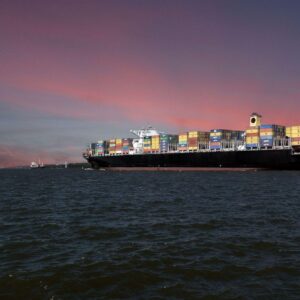
The emirate of Fujairah already moves large volumes of jet fuel and marine products. Placing a Sustainable Aviation Fuel facility inside the same port network lets feedstocks arrive and finished fuel depart without extra trucking or pipeline upgrades. An overlooked benefit is Fujairahs location outside the Strait of Hormuz. Tankers bypass that narrow choke point, lowering insurance costs and voyage time. This practical geography can improve the price competitiveness of every exported litre.

Local Demand Meets Global Routes

Dubai and Abu Dhabi airports rank among the worlds busiest transit hubs. Regular flights will give the plant a dependable base load of customers. From Fujairah, pipelines connect to aviation storage depots, so airlines will uplift SAF using familiar procedures. Export cargoes can sail directly toward Europe or Asia, meeting rising blending mandates without additional handling steps.

Technology, Feedstocks, and Side Streams

MENA Biofuels is finalising engineering design that combines advanced alcohol to jet conversion with renewable hydrogen generated by solar powered electrolysis. A useful insight is that the oxygen by product from electrolysis can be marketed to nearby metal and medical industries, adding revenue and improving financial resilience. Possible feedstocks include agricultural residues, municipal waste, and captured carbon dioxide, ensuring flexibility as supply chains mature.

Regional Economic Impact

The project supports the national ambition to diversify energy exports while nurturing local expertise in green chemistry. Construction and operation will create skilled roles in process control, logistics, laboratory testing, and maintenance. Suppliers across the Gulf can supply equipment, strengthening a broader manufacturing ecosystem.

Conclusion

The upcoming Fujairah SAF plant illustrates how smart geography, circular by products, and integrated logistics can translate environmental aims into commercial opportunity. As the first commercial scale facility in the United Arab Emirates, it stands to anchor a new era of cleaner aviation energy across the wider region.

Source – Biofuels International

CORSIA REGULATORY DOCUMENT UPDATE: ​CORSIA Methodology for Calculating Actual Life Cycle Emissions Values (Seventh Edition) November 2025

A Clear Look at the Seventh Edition Released in November 2025

The latest edition of the CORSIA Methodology for Calculating Actual Life Cycle Emissions Values builds on previous versions with a deeper level of clarity and structure. This update arrives at an important moment for aviation actors who are preparing for tighter monitoring and transparent reporting across global supply chains.

Why the Revision Matters

The seventh edition offers a more refined classification of feedstocks. Materials such as spent bleaching earth and several coconut processing residues receive updated recognition as processing residues. New subcategories for agricultural by products and forestry by products create a much clearer landscape for fuel developers and auditors.

This revision also enhances alignment between sustainability criteria and the pathways used to calculate emissions. The stronger structure improves the consistency of reporting and eases verification, which supports better decision making across supply chains. For sustainability teams working with fuel producers, this clarity makes it easier to identify opportunities for lower emissions outcomes while reducing uncertainty.

Key Technical Enhancements

The update expands specifications for waste and residue materials. It refines the guidance that determines how these materials qualify within CORSIA boundaries. Clearer conditions help fuel developers validate their choices early in the process and create more confidence among operators that emission reductions are accurately calculated.

It also extends the categorisation of by products in a way that encourages greater use of unavoidable residues. This focus on circular resource use is a valuable signal for sustainability professionals who are designing strategies that reduce waste while strengthening compliance.

Conclusion

This edition demonstrates a growing global commitment to consistency in emissions accounting. It supports aviation actors who are aiming to adopt high quality fuels and stronger sustainability practices. Professionals advising on energy transitions can use these insights to guide partners toward more credible low emissions pathways and support wider industry confidence in transparent reporting.

Download Document File Here: CORSIA REGULATORY DOCUMENT UPDATE: ​CORSIA Methodology for Calculating Actual Life Cycle Emissions Values (Seventh Edition) November 2025

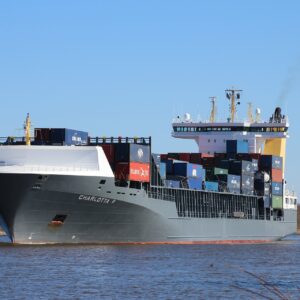
Nuclear Powered Boxships Unlock Speed Savings and Zero Emission Potential

A New Energy Frontier

Shipping has studied alternative fuels for years yet small modular reactors now put an entirely new card on the table. By embedding a sealed reactor unit a modern fourteen thousand teu vessel can cruise at twenty five knots without using any bunkers. That single change releases precious hold space since bulky fuel tanks disappear and it frees owners from price swings in the oil market.

Financial Upside

Lloyds Register and LucidCatalyst calculate that removing fuel purchases and carbon payments could trim fifty eight million dollars from yearly operating costs. Put differently each reactor would finish paying for itself long before its five year refuelling interval. The added speed also lifts annual cargo capacity by thirty eight percent because the ship can complete an extra round voyage every year.

Non-Obvious Insight

The report hints at a subtle but powerful effect. When fuel is no longer loaded, vessels depart and arrive with constant displacement. That steadier draft reduces structural stress and may extend hull life. Lower maintenance budgets could quietly strengthen the overall return on investment.

Building the Supply Chain

A thousand unit commitment spread over one decade would allow modular factories to reach a target price below one thousand dollars per kilowatt. Standard drydock cycles can handle maintenance keeping schedules familiar for crew and terminals. Safety governance will rely on an alliance among yards, regulators and reactor vendors ensuring clear accountability.

Looking Forward

Market modelling shows forty to ninety gigawatts of maritime nuclear capacity by mid century if policy aligns. Early movers will likely capture premium charter rates as shippers pursue predictable schedules and certified zero emission transport.

Conclusion

Small modular reactors hold the promise of cleaner oceans and faster trade while offering owners a straightforward economic case. Collaboration now can turn that promise into everyday reality for global logistics.

Source – Splash247

Stronger Market Stability Reserve Smooths Launch of ETS2

The European Commission has unveiled a focused amendment to the Market Stability Reserve that will accompany the new emissions trading system for buildings and road transport known as ETS2. By embedding stronger guardrails before the market opens in 2028, policymakers aim to encourage early investment while preventing excessive price volatility.

How the top up mechanism works

If the average allowance price climbs above forty five euro in 2020 terms, the reserve will automatically double its supply injection, releasing as many as eighty million allowances each year until 2029. That figure comfortably exceeds the annual reduction target of sixty million tonnes, acting as an airbag for households and small enterprises.

Long term resilience

All six hundred million allowances parked in the reserve will remain valid beyond 2030, ensuring that liquidity support does not suddenly vanish. Extending validity gives market participants confidence to bank and deploy allowances as part of decade spanning renovation and fleet renewal strategies.

Early auctions unlock revenue

The Commission also plans to move the first auction to 2027. This simple calendar shift could make up to six billion euro available through a frontloading facility managed with the European Investment Bank. Member States will be able to channel these proceeds into heat pump rollouts, bus electrification and targeted income support.

Non-obvious insight

Because the reserve reacts to price averages rather than daily spikes, it resembles the slow release valve of a pressure cooker. That design choice avoids encouraging speculative trading around short lived highs, a subtle yet powerful way to keep the market anchored in real abatement cost.

Conclusion

By combining automatic supply management with earlier revenue streams, the updated reserve framework places ETS2 on a predictable path. Investors, consumers and city authorities can plan upgrades with greater certainty, accelerating the journey toward the European climate target.

source – European Commission

CORSIA REGULATORY DOCUMENT UPDATE: ​CORSIA Default Life Cycle Emissions Values for CORSIA Eligible Fuel (8th Edition) November 2025

A Clearer Path for Aviation Sustainability

The latest update to the Default Life Cycle Emissions Values for CORSIA Eligible Fuels provides a more structured view of how different fuel pathways perform across their full lifecycle. This document helps operators make informed choices when selecting fuels that support global climate goals. It also signals increasing maturity in how the aviation sector evaluates sustainability performance.

What This Update Brings

The publication offers refined values for both core life cycle emissions and induced land use change. These improvements reflect expanded scientific understanding, updated modelling methods, and a broader set of feedstocks.
For example, as seen in the tables within the document, values now account for diverse crops such as miscanthus, switchgrass, and poplar. There is also added clarity on animal fat pathways and waste-based fuels which often carry lower land use impacts.

A notable improvement is the increased detail around applicability. The document explains when specific values may be used and how future compliance cycles affect their adoption. This helps avoid uncertainty during fuel procurement and emissions reporting.

Why This Matters for the Industry

Greater transparency in lifecycle values encourages operators and suppliers to prioritise fuels that demonstrate measurable climate benefits. It also helps align procurement decisions with long term net zero aspirations in aviation.
For sustainability teams, this document acts as a technical anchor when validating claims or comparing pathways.

Organisations that assist transport stakeholders can use this clarity to support more responsible fuel strategies. By helping clients navigate evolving methods and emerging feedstocks, specialists in the field can enable smoother transition planning while maintaining environmental integrity.

Conclusion

The updated CORSIA values offer more than numerical guidance. They provide confidence, structure, and a stronger basis for choosing fuels that genuinely reduce emissions. As the aviation sector accelerates its sustainability journey, the insights in this document help decision makers adopt solutions that are both credible and forward looking.

Download Document File Here: CORSIA Default Life Cycle Emissions Values for CORSIA Eligible Fuel (8th Edition) November 2025

Hitachi Rail Maps Ambitious Path with 2025 Sustainability Statement

Seven pillars guiding progress

Hitachi Rail has published its two hundred twenty five page Sustainability Statement for fiscal year twenty twenty four, outlining measurable actions aligned with the wider Hitachi PLEDGES strategy. The document commits to reducing operational greenhouse emissions by seventy five percent from the two thousand nineteen baseline within two years and reaches across more than fifty countries where the company now operates following the acquisition of Thales Ground Transportation Systems.

Tangible achievements to date

· Zero waste to landfill already achieved at Hagerstown, Naples and Reggio Calabria sites

· A new carbon neutral digital factory in Maryland powered fully by renewable electricity

· One hundred percent of new rolling stock designed under Eco Design principles

· Continued rollout of tri mode trains that switch seamlessly among electric, battery and diesel power according to network conditions

These milestones demonstrate Hitachi focus on practical decarbonization rather than distant pledges. Each win demonstrates replicable practice for other suppliers and regions.

Innovation unlocks additional value

Digital tools like the HMAX energy platform optimize traction consumption in real time, delivering immediate savings for operators while feeding data back into maintenance planning. The company also highlights its BeWell program, which combines ergonomic cab layouts, mental health support and inclusive development pathways that raise employee engagement, proving that sustainable mobility and wellbeing progress hand in hand.

Non-obvious insight

By applying Double Materiality Assessment under upcoming European reporting standards, Hitachi creates a common language that investors can plug directly into risk models. This foresight may attract lower cost capital for expansion projects, providing a financial upside that pure carbon metrics alone cannot achieve.

Conclusion

The 2025 statement shows Hitachi Rail merging environmental stewardship, human centric design and digital innovation into a single competitive engine, reinforcing its role in advancing connected, efficient and resilient mobility worldwide.

Source – Railway Age

e1 Marine and PowerCell Advance Methanol Fueled Hydrogen Power at Sea

Order signals market readiness

PowerCell Group has selected eight e1 Marine M30 reformers for its first commercial M2Power 250 modules, valued at one hundred fifty million Swedish kronor and destined for a European yard. Each two hundred fifty kilowatt module pairs the reformer with proven marine fuel cells creating a self

contained plant capable of two megawatts when assembled in series. Deployment under contract for twenty twenty nine shows tangible confidence that methanol fed hydrogen can displace diesel gensets on ocean going vessels.

How the system works

1. The reformer converts a simple blend of methanol and deionized water into ninety nine point nine seven percent pure hydrogen on demand.

2. Generated hydrogen feeds directly into PowerCell stacks, avoiding high pressure storage tanks while maintaining steady electrical output.

3. Waste heat from both units can be captured for hotel loads, improving total efficiency beyond eighty percent.

Because the methanol remains liquid at ambient conditions, bunkering uses existing infrastructure, unlocking immediate geographic flexibility.

Benefits for operators

The integrated architecture arrives fully assembled, reducing engineering hours at the yard and simplifying class approvals. Continuous conversion at sea eliminates boil off losses common with cryogenic hydrogen, while renewable methanol pathways promise up to eighty five percent greenhouse reduction against diesel. By lowering complexity, the partners believe the package accelerates uptake in markets where green fueling networks are still emerging.

Non-obvious insight

Producing hydrogen just minutes before consumption lets designers downsize ventilation and gas detection equipment compared with full tank storage. That hidden weight saving improves vessel stability and may even allow an extra revenue container on feeder ships, subtly boosting operational economics.

Conclusion

e1 Marine and PowerCell are translating laboratory milestones into a manufacturable product, giving shipowners a straightforward bridge between current fuels and a future carbon neutral fleet.

Source – Hellenic Shipping News

ICAO Expands Eligibility Programmes for CORSIA Carbon Units

A Milestone for Sustainable Flight

When the international community adopted the Carbon Offsetting and Reduction Scheme for International Aviation in 2016 it created a single global framework for managing emissions from cross border flights. The latest decision by the Council of ICAO increases the pool of programmes able to supply CORSIA Eligible Emissions Units. Eight programmes will cover the first compliance cycle from 2024 to 2026. Another four have already been cleared for the second cycle running from 2027 to 2029, with more applications expected in 2026.

What the New Approvals Mean

· Airlines gain confidence that an ample volume of high quality credits will be available when surrender obligations begin in 2025

· Competition among registries can lower transaction costs and stimulate innovation in monitoring and verification methods

· Governments can align their climate strategies by issuing a Letter of Authorization that removes any risk of double claiming under the Paris Agreement

· Project developers receive a predictable international outlet for credits, encouraging fresh investment in renewable energy and nature based solutions

Programme Breakdown

First cycle suppliers: American Carbon Registry, Architecture for REDD Plus Transactions, Climate Action Reserve, Global Carbon Council, Gold Standard, Isometric, Premium Thailand Voluntary Emission Reduction Program and Verified Carbon Standard. Second cycle suppliers to date: American Carbon Registry, Architecture for REDD Plus Transactions, Gold Standard and Verified Carbon Standard.

A Subtle but Powerful Insight

Because credits must be tagged with a governments authorization, the registry that can integrate national inventory data most seamlessly may become the preferred choice for airlines. This administrative efficiency could become as valuable as the underlying credit price, creating a new competitive dimension within voluntary carbon markets.

Conclusion

The expanded list of eligible programmes strengthens the operational readiness of CORSIA and reassures airlines, investors and states that practical tools exist to reach the sectors net zero target. Early engagement with authorised credits today can secure supply and reveal pricing advantages tomorrow.

Source – International Civil Aviation Organization

EU Finalises Groundbreaking 2040 Climate Target

A Milestone in European Climate Governance

For the first time the European Union is setting a medium term climate target through the full ordinary legislative procedure. Rather than relying on a single summit decision, both Parliament and Council will vote on a formal amendment to the European Climate Law that writes a ninety percent net emission reduction for 2040 directly into binding legislation. This approach increases transparency, invites citizens to follow every step of the debate and gives long term investors a clear legal reference.

Scientific Guidance Gains Influence

A key feature of the process is the prominent role of the European Scientific Advisory Board on Climate Change. Its independent calculation of an emissions path compatible with the Paris goal provided the numerical foundation for the ninety percent figure. While politics ultimately selected the lower end of the recommended range, the simple fact that science opened the discussion establishes a useful precedent. A less obvious insight is that future targets might move faster because the Board must update its analysis every year, creating a rolling source of ambition rather than a once per decade review.

Opportunities for Business and Society

The legislation foresees that up to five percent of the reduction may be achieved through high quality international carbon credits. This creates a structured market signal for European firms to finance renewable energy and forest projects abroad while transferring technology and expertise. Meanwhile a

biennial progress check will focus on competitiveness, energy prices and employment, ensuring that industrial policy and climate policy advance together. Regions with strong renewable resources, advanced materials or nature based solutions therefore gain a predictable framework for new jobs and training.

Conclusion

The amended Climate Law blends science, accountability and cooperation, positioning Europe for a confident march toward climate neutrality by mid-century.

Source – Verfassungsblog

Malaysia Commences Sustainable Aviation Fuel Era

A Boost for Climate Friendly Flight

Malaysia has officially entered the sustainable aviation fuel landscape with the launch of its first commercial scale production facility in Pasir Gudang. The milestone supports national plans for carbon neutrality by twenty fifty and aligns with the International Civil Aviation Organisation objective of net zero air transport. Airlines can now cut emissions without altering aircraft or airport infrastructure, offering immediate progress toward cleaner skies.

Industrial Scale Production

EcoCeres Renewable Fuels operates the new plant at Tanjung Langsat with capacity for three hundred fifty thousand tonnes of SAF each year. The output positions Malaysia as a reliable supplier for Southeast Asian carriers seeking dependable volumes at competitive prices. Independent certification under the International Sustainability and Carbon Certification scheme provides assurance that every litre meets strict climate and social criteria. An often overlooked benefit is logistical efficiency; proximity to major shipping lanes reduces transport emissions associated with moving fuel from distant producers.

Policy Framework and Feedstock Innovation

A proposed national blending mandate will require a one percent SAF share on flights departing Kuala Lumpur International Airport. Although modest, the requirement will ignite demand and provide business certainty for long term investment. Feedstock availability is already expanding. A nationwide collection program for used cooking oil has gathered more than one thousand two hundred tonnes

from households, proving that community level participation can power commercial aviation. Authorities are also exploring empty fruit bunch oil and palm oil mill effluent, turning agricultural residues into premium export products while supporting rural incomes.

Conclusion

By combining industrial capacity, supportive policy and innovative feedstock sourcing, Malaysia is crafting a sustainable aviation ecosystem that benefits climate, communities and commerce. The project demonstrates how collaboration across ministries, industry and households can propel the entire region toward lower carbon travel.

Source – New Straits Times