

CORSIA REGULATORY DOCUMENT UPDATE: CORSIA Central Registry (CCR) Information and Data for Transparency – Part III

The Importance of Clarity in Climate Accountability

The International Civil Aviation Organization (ICAO) continues to shape aviation’s sustainability path with the release of Part III of the CORSIA Central Registry. This section compiles verified CO₂ emissions data for international flights during 2024, offering one of the most comprehensive overviews of aviation’s environmental footprint yet.

Transparency in emissions reporting is not just about data collection. It is about accountability. Each dataset represents a nation’s progress toward reducing the carbon intensity of air transport, a crucial step in meeting global climate goals.

How the Data Strengthens Global Collaboration

The registry aggregates CO₂ emissions across every state pair, an innovative approach that shows how connected our skies truly are. Even countries that faced challenges in submitting complete data are covered through ICAO’s gap-filling methodology, ensuring no region is left out of the climate accountability framework.

This open access to standardized information fosters trust, supports fair policy design, and encourages innovation. Airlines, regulators, and sustainability consultants can now make better-informed decisions rooted in verified global data.

Building a Culture of Measured Progress

Beyond compliance, transparent reporting builds a culture of continuous improvement. By understanding where emissions are concentrated, stakeholders can prioritize more efficient flight paths, adopt sustainable aviation fuels, and enhance offsetting mechanisms that genuinely reduce global impact.

Conclusion

The latest CORSIA transparency update represents a quiet but powerful shift, where measurement becomes momentum. Each figure shared is more than a statistic; it is a signal of shared responsibility and global cooperation toward cleaner skies and a sustainable future.

Download Documents File Here: CORSIA Central Registry (CCR) Information and Data for Transparency – Part III

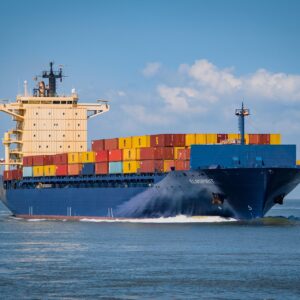
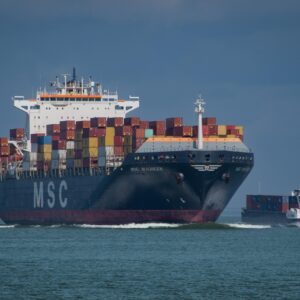
EU sustainable transport plan boosts methane pathway for shipping

What STIP means for methane fuels

The newly released Sustainable Transport Investment Plan from the European Commission places methane derived fuels such as liquefied natural gas biomethane and future renewable e methane alongside other clean energy options. By explicitly citing methane slip mitigation technology and encouraging fuel neutrality the plan sends a clear signal that decision makers value practical solutions available today. This recognition reassures investors that methane propulsion will remain eligible for support mechanisms throughout the decade.

Market momentum already visible

Methane propulsion is not a theoretical concept. DNV order book data show that about seventy percent of alternative fuel tonnage contracted during twenty twenty five is equipped for methane. Shipowners appreciate rapid greenhouse gas gains delivered by modern dual fuel engines plus the huge global bunkering footprint that already serves more than one hundred thirty ports.

Infrastructure advantage

Because LNG terminals pipelines and barges are widely deployed the marginal cost of switching from fossil LNG to biomethane or synthetic methane is modest. Every cubic metre of infrastructure installed today can carry progressively cleaner molecules without additional ship side equipment. That infrastructure continuity dramatically shortens payback periods compared with ammonia or hydrogen options that still need large scale logistics networks.

Emerging biomethane marketplace

A less obvious benefit of STIP is its call for harmonised biomethane eligibility. Aligning guarantee of origin schemes for renewable methane across member states will allow certificates produced in agriculture or waste sectors to follow the gas electronically to any European port. That digital portability could let shipowners secure renewable drop in fuel even when physical biomethane volume is consumed ashore, accelerating fleet decarbonisation through book and claim models.

Conclusion

STIP confirms that methane provides a sturdy bridge toward zero-carbon navigation while preserving flexibility for greener molecules tomorrow. Shipowners’ technology suppliers and fuel producers now share a common policy direction that rewards practical innovation and rapid climate impact.

Source – SEA-LNG

ICAO approves Isometric to issue credits under CORSIA

A Milestone for Carbon Removal in Aviation

The International Civil Aviation Organization has approved Isometric to issue carbon credits under the Carbon Offsetting and Reduction Scheme for International Aviation. This means airlines can now use Isometric verified carbon removal credits to meet their offset obligations, creating a clearer pathway toward global aviation decarbonization.

What This Means for Airlines

Under this United Nations backed framework, airlines are required to offset emissions from international flights that exceed 2019 levels. With aviation expected to need around 500 million tonnes of carbon removals each year by 2050, the inclusion of Isometric credits gives airlines access to a credible and transparent solution that meets international standards.

The Push Toward High Quality Offsets

The approval reflects a growing shift from traditional offsets to verified, high integrity carbon removals. Isometric’s evaluation by the International Civil Aviation Organization confirmed that its system meets stringent standards for transparency, scientific rigor, and environmental integrity. For airlines, this provides assurance that their investments directly support real and measurable climate impact.

Industry Voices on the Shift

Leaders across the aviation sector have welcomed this progress. Carrie Harris, Director of Sustainability at British Airways, highlighted that expanding the global carbon removals market is essential for aviation to reach net zero. The recognition of Isometric’s credits strengthens the credibility of the market and sends a strong signal to carbon removal developers worldwide.

Conclusion

This development signals a turning point in the global aviation industry’s approach to carbon management. As more high-quality carbon removal options become available, airlines can take meaningful steps toward long term sustainability goals while supporting a more accountable carbon market.

Source

Revenue Certainty Mechanism Accelerates United Kingdom Sustainable Aviation Fuel Ambitions

Parliament has introduced the Sustainable Aviation Fuel Bill, setting clear blending requirements and, crucially, a Revenue Certainty Mechanism intended to give producers confidence in future income. The schedule begins at two percent SAF in 2025 and climbs steadily to twenty two percent by 2040, providing airlines and refiners a transparent pathway for adoption.

What the Bill Delivers

The mechanism promises that producers will receive a predefined price for each litre of SAF sold in the United Kingdom regardless of volatile crude markets. When market prices fall below the agreed

reference, government support fills the gap. When prices rise above, producers pay back the difference, protecting taxpayers while smoothing cash flow.

How the Mechanism Works

Modeled loosely on the electricity Contracts for Difference scheme, the policy establishes competitive auctions that discover a strike price. Successful bidders then receive long term contracts, enabling project finance lenders to rely on stable revenue projections.

Non-Obvious Insight: Financial Predictability Attracts Pension Funds

Because revenue variability is removed, infrastructure investors such as pension and insurance funds, which traditionally avoid commodity risk, can now participate in SAF projects. Their lower cost of capital can reduce consumer prices more effectively than grants alone.

Wider Economic and Environmental Impact

The bill encourages use of domestic waste based feedstocks, fostering circular economy practices and rural job creation. Early mandates send a positive signal to engineering and construction firms to develop supply chains, while airlines gain confidence that sufficient quantities will be available to meet forthcoming carbon targets.

Conclusion

The Sustainable Aviation Fuel Bill demonstrates how smart policy design aligns environmental goals with economic growth. By pairing blending mandates with dependable revenue, the United Kingdom is laying the foundation for a thriving low carbon aviation sector.

Source – Gowling WLG

Singapore travellers to contribute $1 to $41.60 towards sustainable jet fuel from October 2026

A Greener Takeoff

Starting October 2026, passengers departing from Singapore will contribute a small levy ranging from $1 to $41.60, depending on travel class and distance. This move marks a major stride toward a more sustainable aviation industry, with proceeds directly funding the purchase of sustainable aviation fuel (SAF).

The levy applies to tickets sold from April 2026 and will be transparently listed as a separate item on airfares. Longer flights and higher cabin classes will attract higher levies, reflecting their larger carbon footprints.

Making Sustainable Travel the Norm

Singapore aims to replace 1 per cent of all jet fuel used at Changi and Seletar airports with SAF by 2026. This fuel, primarily derived from waste materials such as used cooking oil, can be seamlessly blended with traditional jet fuel without modifications to existing aircraft or infrastructure.

Officials have emphasized that the levy levels are lower than earlier projections, thanks to moderating SAF prices. This pricing stability allows both passengers and airlines to adapt gradually, while ensuring a steady path towards greener aviation.

Beyond Passenger Flights

The levy will also extend to cargo shipments, chartered flights, and private jets. It ensures that sustainability efforts cover all forms of air travel and logistics, aligning with Singapore’s broader decarbonisation goals.

By 2030, the nation plans to raise SAF usage to between 3 and 5 per cent, setting a benchmark for other aviation hubs in Asia.

Conclusion: A Collective Climb Toward Net Zero

Singapore’s measured and transparent approach to the green jet fuel levy demonstrates how small, well-structured contributions can drive industry-wide change. It’s a model that reflects balance—between cost, practicality, and environmental responsibility, ensuring that the journey to net zero takes off on a firm, fair footing.

Source

European Parliament Sets Course for Ninety Percent Emission Reduction by 2040

Core elements of the proposal

Members of the European Parliament have voted to anchor a target that would lower greenhouse gas emissions by ninety percent compared with 1990 levels by 2040. The motion advances the existing Climate Law that already mandates a fifty five percent reduction by 2030 and full neutrality in 2050. By setting a clear intermediate milestone lawmakers aim to provide investors and innovators with greater certainty as they plan new infrastructure, energy systems, and supply chains.

Flexibility tools

The proposal allows up to five percentage points of the required reduction to come from high quality international carbon credits after 2036, subject to strict verification. In addition, domestic permanent carbon removal solutions such as mineralisation or deep geological storage can offset emissions from sectors that are technically difficult to decarbonise. Parliament also backed a one year delay for the second emissions trading system that will cover fuels used in buildings and road transport, giving member states more time to prepare households and businesses.

A non-obvious insight

By accepting limited external credits only after 2036, the Union effectively creates an eight year runway for European service providers to build monitoring and certification expertise. This emerging knowledge market could become an export advantage as other regions craft their own net zero roadmaps.

Implications for transport and logistics

Road hauliers, shipping lines, and aviation operators will all benefit from the consistent policy signal. Technology developers can scale alternative fuels, battery systems, and carbon capture devices with confidence that demand will remain strong through at least 2040. Meanwhile, the gradual

introduction of flexible mechanisms keeps compliance costs predictable, supporting competitiveness for European manufacturing and trade corridors.

Conclusion

The new target combines ambition with pragmatism, marrying firm environmental intent with measured flexibility. Should the plan become law, Europe will strengthen its leadership in climate solutions while fostering innovation that supports a vibrant, low-carbon transport economy.

Source – European Parliament

Commission Hails Agreement on New Rules to Harmonise Transport Emissions Calculations Across the EU

A Milestone for Clean Mobility

The European Commission has reached a major political agreement on the new CountEmissionsEU regulation, a move that marks a turning point for sustainable transport across the continent. The initiative creates a shared framework for measuring greenhouse gas emissions from freight and passenger transport, paving the way for greater consistency and trust in emissions reporting.

How the Framework Works

CountEmissionsEU establishes a single, reliable system based on the international standard EN ISO 14083:2023. The regulation ensures that data from all transport operations can be compared on equal terms. By using a unified approach, businesses and authorities will be better equipped to understand the true environmental impact of transport activities and take action accordingly.

Empowering Businesses and Consumers

To make the system accessible and efficient, the Commission will launch two free public databases for emissions data and provide a user-friendly calculation tool. Certified third-party tools will also be encouraged to promote innovation. Larger companies will have to verify their data for accuracy, while smaller enterprises will benefit from simpler processes, keeping compliance fair and balanced.

This transparency empowers consumers to choose lower-carbon travel and delivery options, while helping transport providers identify ways to improve efficiency. It also supports investors and procurement bodies in making more sustainable decisions.

Towards a Greener 2050

The CountEmissionsEU regulation aligns with the broader goal of cutting transport emissions by 90 percent by 2050. With greater clarity and data integrity, the transport sector gains a powerful tool to track progress and drive genuine reductions in emissions.

Conclusion

The introduction of CountEmissionsEU reflects Europe’s commitment to measurable climate action. By harmonising emissions calculations and providing open access to data, the region takes a significant step toward a transparent, efficient, and greener transport future.

Source

ReFuelEU REGULATION DOCUMENT UPDATE: List of Competent Authorities of the Member States

A Continental Effort for Cleaner Aviation

The European Commission’s latest update on ReFuelEU Aviation marks an important step toward harmonising sustainable air transport across the continent. Each member state has now designated competent authorities to oversee and enforce the use of sustainable aviation fuels (SAF), ensuring accountability and consistency across the sector.

From Austria’s Ministry for Innovation and Infrastructure to Spain’s Aviation Safety Agency, the network of national regulators is expanding coordination that will make Europe’s skies cleaner and more equitable. This unified approach is not just administrative; it is the foundation for scaling sustainable aviation at speed.

Why This Matters

This development reinforces how deeply the EU is embedding sustainability into aviation. Clear responsibilities are now established for fuel suppliers, airport operators, and regulators. It means every litre of fuel and every take-off will increasingly be tied to measurable carbon reductions.

By promoting transparency, collaboration, and enforcement, the regulation moves Europe closer to its Fit for 55 targets while creating opportunities for innovation in alternative fuels and lifecycle carbon monitoring.

What Comes Next

With this structure in place, the challenge will shift toward implementation, ensuring that SAF supply chains, reporting systems, and verification processes are not just compliant but truly transformative.

Conclusion

Europe is quietly reshaping aviation governance. The ReFuelEU framework demonstrates that sustainability is not an afterthought but an operating principle. As regulatory clarity strengthens, the path ahead for decarbonised aviation looks clearer, fairer, and far more achievable.

Download Documents File Here: List of competent authorities of the Member States responsible for enforcing the application of ReFuelEU Aviation

ReFuelEU REGULATION DOCUMENT UPDATE: List of aviation fuel suppliers in-scope of ReFuelEU Aviation

Understanding the ReFuelEU Aviation 2025 Update

The European Commission’s newly released list of aviation fuel suppliers in scope for the 2025 reporting period marks a key milestone in the continent’s journey toward cleaner skies. Covering suppliers across more than 25 countries, the list underscores a united effort to ensure that all market players—large and small—align with Europe’s sustainable aviation fuel (SAF) targets.

What This Means for the Industry

By naming companies from Austria to Sweden, the document goes beyond formality. It provides visibility, accountability, and a subtle yet powerful nudge for all fuel suppliers to strengthen their readiness for SAF integration. Multinationals such as Shell, TotalEnergies, and BP appear alongside regional operators, illustrating that the energy transition now touches every corner of the aviation network.

The scope of the list reflects not just compliance but an evolving ecosystem—one where fuel supply, data reporting, and sustainability verification are becoming inseparable. For airlines, this transparency offers clarity on where to source compliant fuel and how to plan their decarbonization pathways with greater confidence.

Why It Matters for Sustainable Aviation

This update is not simply a register; it’s a signal of maturity. Europe’s aviation sector is entering a phase where regulation, responsibility, and innovation are converging. Each supplier listed is part of a collective experiment in transforming a traditionally carbon-heavy industry into one that values environmental stewardship as much as operational efficiency.

Conclusion

As Europe accelerates toward its 2050 climate goals, such regulatory clarity empowers the entire aviation supply chain to invest with purpose. The message is clear sustainability is no longer optional; it’s the runway for growth.

Download Document File Here: List of aviation fuel suppliers in-scope of ReFuelEU Aviation

New Teesside Megaproject Converts Biomass Waste to Clean Jet Fuel

Moving to a Bigger Home

When Alfanar evaluated its Lighthouse Green Fuels project it discovered the former INEOS Nitriles site in Seal Sands offered everything the initial plot lacked. The new location is only five hundred metres away but brings deeper quays, rail sidings and ample space. From feedstock pre-treatment to final fuel storage every stage will now sit within one integrated boundary. That design choice minimises truck movements and accelerates construction schedules.

Production Highlights

Phase one will process one point five million tonnes of forestry, sawmill and agricultural residues every year. The result will be more than one hundred eighty million litres of certified second generation Sustainable Aviation Fuel. When blended into airline tanks the supply offsets the carbon footprint of about four thousand five hundred transatlantic trips between London and New York. Because the plant sits close to a developing carbon capture pipeline, operators expect a two hundred percent lifecycle emissions reduction compared with conventional kerosene once sequestration begins.

Non-Obvious Insight

Locating the pretreatment units alongside the reactor provides a useful thermal advantage. Waste heat from the gasification stage can dry incoming biomass, lowering total energy demand and shielding the business model from volatile gas prices. This simple piece of engineering integration often hides in technical drawings yet delivers meaningful cost savings over decades.

Community Impact

Local leaders forecast thousands of high quality jobs in construction, operations and maintenance. Crucially, the initiative will anchor a new regional supply chain for biomass logistics, equipment fabrication and carbon management, further diversifying the Tees Valley economy.

Conclusion

By combining abundant feedstock, excellent logistics and smart process integration, Lighthouse Green Fuels is setting a new global benchmark for Sustainable Aviation Fuel deployment. Teesside is poised to become a marquee reference point for decarbonised flight.

Source – Biofuels International