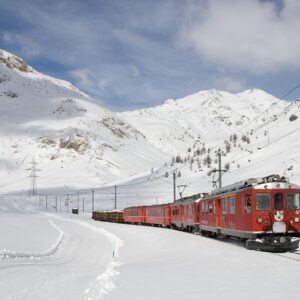


Europe Accelerates Toward a Golden Age of Low Carbon Rail Travel

Momentum across the continent

From Berlin to Barcelona, national rail administrations are channelling record investment into high speed and overnight services. The European Commission aims to double high speed passenger kilometres by twenty thirty, and recent announcements show member states moving rapidly from strategy to shovels.

Flagship routes to watch

Germany and France will relaunch the Paris Berlin sleeper in March, compressing the journey into relaxed overnight hours. Spain continues to widen its already vast network, adding affordable options into Extremadura and Castilla La Mancha while modernising the Madrid Lisbon corridor. Switzerland keeps modal share leadership with the forthcoming Basel Malmo sleeper, opening a scenic carbon light path to Scandinavia. Austria’s Koralmbahn, complete with one of the worlds longest rail tunnels, has cut Graz to Klagenfurt travel time to forty five minutes.

Technology driving change

Hydrogen powered multiple units are now displacing diesel sets on German branch lines, proving that non electrified sections no longer need fossil fuel. Biometric ticketing pilots in major stations promise friction free boarding that rivals aviation gate times. Together these advances enhance the passenger proposition and make rail a default choice for business trips under eight hundred kilometres.

Non-obvious commercial angle

Night services are evolving from austere couchettes into mini hotels on wheels. Operators report that on board dining, cowork lounges and premium cabins generate ancillary revenue previously limited to airlines. This hospitality income stream improves the business case for additional long distance sleepers without requiring subsidies.

Tips for travellers

  • Book early for new sleepers as initial demand is exceeding capacity.
  • Check for discounted green passes in Hungary, Latvia and Ireland.
  • Pack light to maximise comfort in compact high-speed coaches.

Conclusion

Europe is proving that ambitious climate goals can go hand in hand with enjoyable travel. By combining infrastructure upgrades with customer centric service design, rail is set to become the continent’s preferred mode for both work and leisure journeys.

Source – Travel And Tour World

Sail for Change Unlocks Major Scope 3 Reductions in Automotive Logistics

Emissions Mission in Maritime Logistics

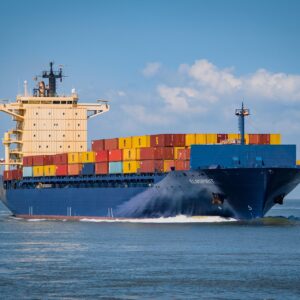
Vehicle shipping is often a quiet driver of Scope 3 emissions. Yet fuel choices can turn routine transport into measurable progress.

What Toyota Motor Europe Achieved

From August to December 2024, Toyota Motor Europe cut 22,148 tonnes of CO2e through United European Car Carriers Sail for Change fuel switch programme. The saving came from transporting 54,991 vehicles on vessels bunkering lower carbon marine fuels. The impact is comparable to growing 366,215 tree seedlings for 10 years.

Why Verification Matters for ESG Reporting

Action matters more when it is provable. EnviroSense validated the savings as compliant with EU RED II sustainability criteria for marine fuel sourcing, including agricultural biomass plus bio waste and residue feedstocks. This strengthens ESG reporting and reduces the risk of disputed claims.

From Savings to a Scalable System

UECC and Toyota have collaborated for over 30 years, with close to 200,000 vehicles shipped annually. For 2025, Toyota expects 57,448 tonnes of CO2e reduction on routes from Turkey and the Czech Republic to Northern Europe. The insight is simple: scale arrives when a climate measure is built into procurement and planning, not treated as a pilot.

A Practical Insight for Supply Chain Teams

Decarbonising logistics starts with a question: can providers offer low carbon options with auditable evidence. When purchasing guidelines reward verified reductions, carriers have a clear signal to invest in alternative fuels and newer vessels.

Conclusion

This case shows that Scope 3 progress is not only about new technology. It is also about partner selection, proof, and embedding carbon outcomes into everyday shipping decisions. It helps finance teams trust the numbers they publish. To replicate results, map your highest volume lanes, request verified fuel programmes, and set supplier criteria that make lower emissions the default.

Source

Bunge Brazil Opens Certified Soy Route to Sustainable Aviation Fuel

Breaking New Ground

Bunge has become the first company in Brazil to secure certification for soybeans destined to produce sustainable aviation fuel under the ISCC CORSIA PLUS programme. The approval covers its Rondonopolis unit in Mato Grosso and demonstrates that mainstream commodity supply chains can meet stringent international criteria for renewable jet feedstocks.

Why the ISCC CORSIA PLUS Label Matters

ISCC CORSIA PLUS goes beyond basic sustainability checks. The Low LUC seal included in the Bunge audit confirms minimal risk of indirect land use change, signalling that increased productivity rather than new farmland can supply rising biofuel demand. This nuance is essential for credibility with regulators and investors.

Good News for Farmers

For soybean growers the certification creates a premium market that rewards efficient farming. Practices such as precision fertiliser application and cover cropping now translate directly into eligibility for SAF contracts. Farmers who document performance with satellite monitoring could see stronger income without expanding their cultivated area.

Implications for Airlines

Airlines will benefit too. A reliable soybean based pathway gives carriers another feedstock option as global mandates move closer. Global aviation consumes around three hundred million tonnes of fuel annually, so every certified plant expands the pool of renewable molecules needed to achieve net zero flight.

Hidden Advantage: Logistics Efficiency

A lesser known advantage concerns transport logistics. Brazilian soy already travels through established ports and rail corridors serving global protein markets. Redirecting a small fraction toward domestic biorefineries could eliminate the need to build entirely new supply chains for SAF, cutting scope three emissions associated with feedstock transport and reducing capital expenditure for infrastructure.

Conclusion

By validating responsible soy as a viable input, the certification brings Brazil and the aviation sector closer together in the climate transition. It showcases how existing crops can fuel innovation when transparency and science guide decision making.

Source – BioEnergy Times

EU and UK ETS Linkage Negotiations Begin

A Reset in Climate Cooperation

Formal negotiations will start next week to connect the European Union Emissions Trading System with the United Kingdom scheme. The effort marks a fresh chapter of climate collaboration after Brexit and promises to simplify carbon accounting for companies that trade intensively between the two economic zones.

Why Linking Matters

At present importers moving steel cement and other carbon intensive goods from Britain into Europe face the Carbon Border Adjustment Mechanism surcharge. A link would allow allowances purchased in either market to offset those emissions, removing duplicate costs and reinforcing shared climate ambition rather than bureaucratic paperwork.

Benefits for Industry

Industry groups have estimated that avoiding the levy could save roughly eight hundred million pounds a year once the mechanism fully applies. Beyond direct savings, predictable and aligned carbon pricing strengthens investor confidence. Steelmakers for example can model long term returns for electric arc furnace upgrades knowing that European and British carbon credits hold comparable value.

Beyond Tariffs: A Strategic Opportunity

The talks also create a testing ground for digital interoperability of registries. If the two systems agree on shared metadata for allowance transfers, that standard could later underpin an international carbon

settlement network similar to the SWIFT protocol used by the banking sector. Such infrastructure would lower transaction costs and make cross border climate finance as routine as wire transfers.

Conclusion

With political commitment growing on both sides of the Channel, rapid progress is possible. A timely agreement would not only cut costs but also showcase collaborative leadership in building an efficient and fair carbon economy. It would signal that climate ambition and competitive trade can advance together.

Source – EU Today

Santiago Commuter Rail Gains Momentum With New Electrification and Design Deals

Chilean State Railways EFE has taken a significant step toward delivering fast reliable commuter services for Santiago by awarding three high value contracts that combine Chinese electrification expertise with French engineering oversight. The awards center on two key corridors west and north of the capital that will connect more than one million six hundred thousand residents to economic opportunity.

Major Contracts Announced

China Railway International Group secured a contract valued at approximately one hundred million United States dollars to electrify the Alameda Melipilla and Santiago Batuco lines. The program includes eight traction substations and multiple grid connections that will feed modern overhead catenary equipment, enabling clean quiet train acceleration.

French consultancy Systra will deliver detailed track and power design for the sixty-one kilometre Alameda Melipilla route and provide technical inspection and project management for the shorter Santiago Batuco service. Together these assignments guarantee consistent standards and smooth coordination with civil works contractor consortia already active on the corridors.

Benefits for Travelers and Communities

  • Travel time Santiago to Melipilla projected at forty eight minutes
  • Batuco journey target stands at twenty four rapid minutes only
  • Electrification eliminates diesel exhaust improving health along suburban alignments significantly
  • Construction phase creates skilled jobs and facilitates technology transfer domestically

Residents will also gain seamless connections to metro and bus networks, enhancing multimodal travel convenience.

Non-Obvious Insight

By dividing design and inspection duties between independent international specialists, EFE effectively builds a dual layer quality assurance system that can reveal issues early and limit costly rework. This smart governance model may reduce life cycle maintenance expenses, freeing public funds for future extensions.

Conclusion

With renewed expertise and modern power systems, Santiago commuter rail is set for transformative growth. Rapid journeys will shorten distances within the metropolitan region, encourage public transport use, and support inclusive economic development.

Source – International Railway Journal

United Kingdom Nears First Year SAF Target With Strong Momentum

Encouraging uptake in the initial compliance year

New figures from the Department for Transport indicate that Sustainable Aviation Fuel accounted for 1.63 percent of jet fuel supplied between January and late October. While the statistics remain provisional, they already represent more than one hundred sixty million litres of cleaner fuel in airline tanks. With several suppliers still finalising returns, industry group Sustainable Aviation remains

confident that the full two percent requirement for 2025 will be achieved once verified data are published next year.

Demonstrated capability of waste derived feedstocks

Every litre reported to date originated from used cooking oil, much of it collected in Asia and refined to international standards before shipment to the United Kingdom. The performance confirms that established hydro processed ester and fatty acid pathways can scale quickly and deliver reliable product quality. Upcoming capacity in Teesside and Humberside will diversify feedstocks to include municipal solid waste and cellulosic residues, further strengthening supply resilience.

Policy tools accelerating investment

  • The proposed Revenue Certainty Mechanism will guarantee a reference price for producers.
  • Consultations on contract design remain open until early April.
  • Parliament expects the mechanism to be operational before year end 2026.
  • Incremental mandate increases will rise to ten percent by 2030.

A non-obvious insight

Because SAF volumes must be fully validated before they count toward mandate compliance, the apparent delivery shortfall primarily reflects administrative timing rather than production limits. Companies that invest in streamlined chain of custody documentation can capture early sales premiums and reduce working capital exposure, turning paperwork efficiency into a tangible competitive edge.

Conclusion

The inaugural mandate year is already demonstrating market appetite for cleaner aviation energy. Robust progress on both supply volumes and supportive policy signals suggests that the United Kingdom is well positioned to accelerate SAF deployment, drive domestic innovation, and maintain global leadership in sustainable flight.

Source – BioEnergyTimes

United Kingdom Strengthens Climate and Environmental Policy Landscape

A forward-looking emissions scheme

Parliament is reviewing amendments that will modernise the United Kingdom Emissions Trading Scheme from 2027 onward. Proposed changes phase out certain free allowances while extending the overall cap to 2040, giving companies a clear runway for investment planning. Operators in cement, steel, fertiliser, aluminium, and hydrogen production will gradually transition toward full auction pricing, encouraging deployment of low carbon heat, capture, and efficiency technologies.

Market clarity and financial incentives

The scheme retains a robust auction reserve price and an automatic cost containment mechanism, both of which provide price stability and protect against unexpected volatility. Businesses can therefore invest with confidence in solutions such as carbon capture, fuel switching, and renewable power agreements. Importantly, allowances can be banked between the upcoming phases, allowing firms to reward early action and manage compliance cost strategically.

Complementary policy measures

  • A new Climate Change Agreement programme will deliver levy discounts through 2033 for facilities that meet efficiency targets.
  • Draft regulations move decarbonisation readiness reports into the environmental permitting process, streamlining approvals for modern power plants.
  • The Planning and Infrastructure Act introduces voluntary environmental delivery plans, enabling developers to offset impacts through a simplified levy.
  • Updated plastic packaging and landfill tax pathways align fiscal signals with circular economy objectives.

A non-obvious insight

By bringing energy from waste plants into the trading scheme beginning with voluntary monitoring in 2026, policymakers are effectively creating a data rich test bed before mandatory compliance starts in 2028. This soft launch will let plant operators fine tune operations and verify emissions factors, reducing future compliance risk and potentially uncovering profitable energy recovery upgrades.

Conclusion

The refreshed regulatory package demonstrates how clear targets, practical flexibility, and integrated incentives can stimulate private innovation while advancing national climate goals. Companies that engage early stand to reduce costs, capture new markets, and help deliver a thriving zero carbon economy.

Source – Osborne Clarke

Project Wigeon Gains Green Light in Washington

Environmental review completed without conditions

SkyNRG Americas has secured full environmental approvals for Project Wigeon, its planned Sustainable Aviation Fuel facility near Walla Walla. Reviews by the Washington State Department of Ecology and the County Commission confirmed that the project aligns with local land use rules, protects groundwater, and meets transport safety standards. The clear verdict allows the company to move confidently into front end engineering and design during the first half of 2026.

How renewable natural gas will become jet fuel

The plant will convert renewable natural gas sourced from regional dairy digesters and landfills into synthetic paraffinic kerosene that meets ASTM specifications. The process uses Fischer Tropsch synthesis followed by hydro conversion, creating a fuel with up to eighty percent lower lifecycle emissions than conventional jet fuel. At full capacity, Project Wigeon is expected to produce around ninety million gallons per year, enough to supply Seattle Tacoma International Airport with nearly five percent SAF blend.

Local economic lift

  • Construction is projected to generate more than four hundred skilled jobs.
  • Ongoing operations will support family wage positions in rural eastern Washington.
  • Farmers will gain a new revenue stream for captured methane.
  • Municipal waste utilities can monetise biogas that would otherwise be flared.

A non-obvious insight

Because the facility will draw gas from multiple small digesters, SkyNRG is quietly building a virtual pipeline that aggregates biomethane through existing natural gas infrastructure. This distributed model avoids the cost and land impact of new dedicated lines while providing dairies and landfills an immediate, low friction path into the aviation supply chain. The approach could be replicated rapidly across North America, turning scattered waste resources into a cohesive renewable energy network.

Conclusion

Environmental clearance transforms Project Wigeon from an idea into a construction ready opportunity. The approval showcases how cooperative planning, advanced technology, and creative feedstock logistics can align to advance decarbonised flight and boost regional prosperity.

Source – SkyNRG Americas

California SAF Tax Credit Signals New Momentum

A fresh incentive woven into larger climate agenda

California Governor Gavin Newsom proposed budget includes a new Sustainable Aviation Fuel tax credit designed to close the remaining cost gap between conventional jet fuel and SAF. The credit will be available from 2027 to 2030 and stacks with the federal Section 45Z clean fuel production credit that begins in 2027. Together they create a clear price signal that many analysts say is finally sufficient to trigger large scale construction of SAF plants within the state.

How the mechanism will work

The draft language suggests a value up to twenty cents per gallon that declines as carbon intensity scores improve statewide. Unlike many earlier programmes, the credit is refundable, meaning companies with limited tax exposure can still benefit immediately rather than carrying losses forward. That feature quietly turns the measure into a flexible grant and removes a common barrier faced by early-stage producers.

  • Key eligibility criteria will focus on verifiable carbon intensity scores.
  • Feedstocks sourced from in state agriculture and waste streams receive preference.
  • Credit stacking with federal programmes is explicitly permitted, increasing total potential value.

Economic and agricultural ripple effects

Corn growers and oilseed crushers in the Central Valley welcome the proposal. Surplus crop production, underscored by the recent record national corn harvest, can now find new premium markets. Logistics providers also anticipate fresh volumes as SAF moves from rural processing hubs

to coastal airports. The Renewable Fuels Association estimates that each one percent SAF penetration at California airports supports roughly five hundred direct and indirect jobs.

A non-obvious insight

Because the credit value shrinks as statewide average carbon intensity falls, there is a built in incentive for collaborative data sharing among producers. Firms that openly publish lifecycle improvements effectively reduce costs for everybody, turning transparency into a competitive advantage rather than a compliance burden.

Conclusion

California is positioning itself as a first mover in the growing SAF economy, using a carefully calibrated credit that rewards both production and performance. The policy blends climate ambition with pragmatic industry design and should accelerate investment decisions throughout 2026.

Source – Biodiesel Magazine

COSCO and CHIMBUSCO Accelerate Green Marine Fuel Adoption Through Cooperative Framework

Momentum from global forum

During the Green Marine Fuels sub forum of the Carbon Peak and Carbon Neutrality event, COSCO Shipping and its bunkering arm CHIMBUSCO presented a detailed action plan to scale alternative fuels across a network of more than one hundred seventy ports. Selling over twenty-eight million tonnes of fuel in twenty twenty four provides a strong logistics foundation that can now pivot toward low carbon products.

The Five Guarantees philosophy

To win customer trust, CHIMBUSCO applies a service code built on five guarantees: quality, quantity, safety, integrity and stable pricing signals. Embedding these commitments within contracts lowers perceived risk for operators considering the switch to green methanol, biofuel or LNG.

Insight you may not expect

The guarantees also create quantifiable metrics that financiers can embed in performance clauses, linking fuel quality verification with loan conditions. Such alignment could unlock cheaper capital for early adopters, accelerating fleet wide decarbonisation.

Infrastructure and standardisation advances

  • Construction of purpose built methanol bunker vessels is progressing at selected yards
  • Portable refuelling skids enable flexible delivery in secondary ports without major infrastructure
  • Group led standards for alternative fuels are shared with international bodies for harmonisation
  • A closed loop bunker chain certified in July twenty twenty five demonstrates cradle to wake traceability

Partner ecosystem grows

New agreements with energy producers and engineering groups secure feedstock for e methanol and advanced biofuel plants. Combined with COSCO Shipping Energy Transportation assets, the partnerships create a vertically aligned supply chain capable of meeting rising global demand.

Conclusion

By leveraging scale, transparent service principles and collaborative innovation, COSCO and CHIMBUSCO are turning vision into practical supply capacity. Their approach shows how integrated logistics players can guide the maritime sector toward a cleaner and commercially attractive future.

Source – Logistics Manager