

Japan Debuts First Hydrogen Dual Fuel Tugboat Ten Oh
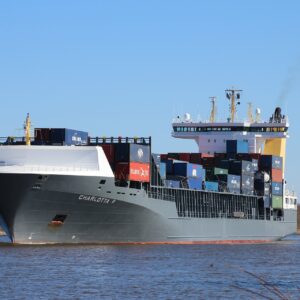
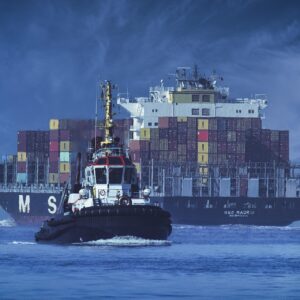
A New Chapter for Ports The delivery of the 38 metre tugboat Ten Oh marks an important step for maritime decarbonisation. Built by Tsuneishi Shipbuilding within the Nippon Foundation Zero

A New Chapter for Ports The delivery of the 38 metre tugboat Ten Oh marks an important step for maritime decarbonisation. Built by Tsuneishi Shipbuilding within the Nippon Foundation Zero

Certification milestone Japanese company NYK Line and group partner Shin Nippon Kaiyosha recently secured third party certification for greenhouse gas savings generated by the ammonia fuelled tugboat Sakigake. The Book

Growing Momentum Carbon pricing has shifted from niche concept into mainstream climate solution. The European Commission Task Force on International Carbon Pricing and Markets Diplomacy is nurturing that shift through

Implementation Timeline Beginning in 2027 every international departure from Korean airports must uplift fuel containing at least 1 percent sustainable aviation fuel. Authorities plan steady increases reaching as much as

How the Levy Works Beginning in 2026 Singapore will collect a fixed charge on every departing ticket estimated between three and sixteen Singapore dollars depending on flight length. Revenue flows

Why this week matters When the Marine Environment Protection Committee convenes in London delegates plan to turn the aspirational 2023 greenhouse gas strategy into binding obligations that start in 2027.

Indonesia has become the latest nation to consider a dedicated fiscal mechanism supporting sustainable aviation fuel. A research brief proposes directing revenue from a service fee on used cooking oil

Three major carriers DHL JetBlue and Scandinavian Airlines have jointly purchased twenty thousand tonnes of sustainable aviation fuel through a pioneering book and claim pilot. The approach allows them to

The European Union Emissions Trading System (EU ETS) is one of the most significant climate policies shaping how industries account for carbon emissions. For many in the transport sector—airlines, shipping

The European Union Emissions Trading System (EU ETS) relies on one critical foundation: trust in the accuracy of emissions data. Without precise measurement and transparent processes, the integrity of the

Transport is at the heart of global connectivity, yet it remains one of the largest contributors to greenhouse gas emissions. The European Union Emissions Trading System (EU ETS) is transforming

The European Union Emissions Trading System (EU ETS) has long been a cornerstone of the region’s climate policy. As its scope evolves, transport operators face both new challenges and fresh

The European Union Emissions Trading System (EU ETS) is one of the world’s most ambitious climate policies. It is designed to put a price on carbon, encourage reductions in greenhouse

Carbon pricing is one of the most powerful tools for reducing emissions. By attaching a cost to carbon, businesses are incentivised to innovate, reduce waste, and adopt cleaner technologies. In

The path to net zero requires bold action across every sector of the economy. In the UK, the Emissions Trading Scheme (UK ETS) is a key mechanism for reducing greenhouse

The UK Emissions Trading Scheme (UK ETS) is a critical tool for driving down greenhouse gas emissions and encouraging investment in low-carbon innovation. Many businesses, particularly in the transport sector,

The UK Emissions Trading Scheme (UK ETS) is a cornerstone of the country’s strategy to reduce greenhouse gas emissions. Designed as a market-based approach, it creates financial incentives for businesses

A Multi Player Approach Towngas through its joint venture VENEX has signed a strategic agreement with Veolia and SIPG Energy to deliver a complete green methanol value chain. The trio

A Digital Marketplace for Cleaner Flight Shell introduced the Avelia platform in 2022 together with Amex Global Business Travel and Accenture. The cloud based service uses blockchain records to match

Aviation is one of the most dynamic sectors of the global economy, but it also carries a significant environmental footprint. As governments, industries, and consumers push for a sustainable future,

The Carbon Offsetting and Reduction Scheme for International Aviation (CORSIA) is one of the most significant regulatory frameworks shaping the future of global aviation sustainability. Airlines are expected not only

The Carbon Offsetting and Reduction Scheme for International Aviation (CORSIA) is a global initiative designed by the International Civil Aviation Organization (ICAO) to manage the climate impact of international flights.

Airlines today operate in an era where sustainability is no longer optional. With international aviation under constant scrutiny for its carbon footprint, the Carbon Offsetting and Reduction Scheme for International

The aviation sector plays a crucial role in connecting the world, but it also contributes significantly to global carbon emissions. To address this, the International Civil Aviation Organization (ICAO) introduced

The aviation sector is under increasing pressure to demonstrate genuine progress on sustainability. With the introduction of the EU Flight Emissions Label (FEL), airlines now have to make their emissions

Aviation is one of the hardest sectors to decarbonize, yet it is also under growing pressure to deliver measurable climate action. Two powerful tools are converging to shape this journey:

The EU Flight Emissions Label (FEL) is a game-changer for aviation sustainability. It provides a harmonized way for passengers to see how their flight choices impact the environment, while ensuring

A Strategic Agreement On six October ministers from Germany and Canada signed a memorandum of understanding that sets in motion the first transcontinental green corridor linking Canadian Atlantic ports with

Ethanol Becomes Jet Fuel Japan Airlines is partnering on a demonstration unit that converts widely available ethanol into drop in jet fuel. The approach requires no engine modifications and can

New rules at a glance Sweden is rewriting its aviation rulebook to ensure that all domestic flights operate without fossil fuel by 2030 and that international departures follow by 2045.