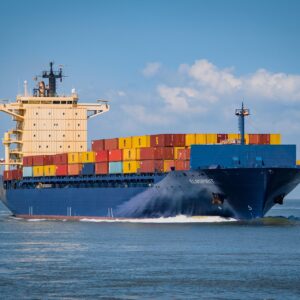


BetterSea and Evigo Unite to Simplify FuelEU Compliance for Shipowners

Why pooling matters

FuelEU Maritime encourages operators to share compliance surpluses and deficits across fleets, creating flexible credit pools. Managing the legal and financial paperwork behind these pools, however, can demand extensive in house resources. BetterSea built a digital marketplace that normalises contracts, automates settlement, and shows real time balances. The new alliance gives Evigo customers access to this capability under the Evigo brand without changing existing software.

A fresh insight

When vessels connect through one standardised pool, the daily price swings of compliance credits are softened because demand and supply are matched inside the pool first. This internal smoothing can lower hedging costs for owners and charterers, a hidden but valuable benefit of the arrangement.

How the partnership works

BetterSea provides the core platform, including smart legal templates, automated escrow, and verified emissions data feeds. Evigo contributes client support, advisory services, and deep experience in fleet efficiency. White labelling ensures that users see familiar Evigo interfaces while gaining the strength of a larger network behind the screen.

The integration requires no new shipboard hardware and minimal shore side effort; data flows from existing noon reports or EU monitoring systems directly into the platform. Financial settlement of pooling positions is handled through digital wallets backed by European banking partners, providing clarity and audit trails.

Market reach and next steps

Through Evigo, hundreds of additional vessels will join the marketplace, increasing liquidity and making it easier for small operators to participate. The partners plan training sessions and webinars to explain pooling mechanics and credit forecasting ahead of the first compliance year.

Conclusion

BetterSea and Evigo demonstrate that collaboration can turn regulation into opportunity. By reducing administrative friction and evening out credit volatility, their shared platform helps the maritime community meet environmental goals while preserving commercial agility.

Source – BetterSea

Turning Fermentation CO2 Into Clean Jet Fuel

Why Fermentation CO2 is Special

Ethanol plants across the United States release forty eight megatons of nearly pure carbon dioxide every year. Because the gas emerges directly from fermentation it contains very few contaminants, making capture far easier than from power stations or cement kilns. Researchers at the University of Michigan see this stream not as waste but as a ready feedstock for Sustainable Aviation Fuel that can cut lifecycle emissions by more than eighty percent.

Competing Pathways

The study compared three production approaches. The widely used Alcohol to Jet process modifies ethanol molecules and currently achieves up to twenty percent carbon intensity reduction. In contrast, two proposed routes begin with captured fermentation carbon. First, a gas fermentation sequence converts carbon dioxide into ethanol and then proceeds through Alcohol to Jet, achieving an eighty four percent reduction. Second, a Fischer Tropsch synthesis uses syngas to create longer hydrocarbon chains directly, reaching a potential ninety percent improvement. Both rely on renewable electricity and green hydrogen to maximise benefits.

Noteworthy Advantage

Perhaps the most overlooked insight from the research is logistical rather than chemical. Existing ethanol plants already employ technicians, storage tanks and feed handling systems that align closely with Sustainable Aviation Fuel production requirements. Repurposing those assets could shorten project timelines dramatically and avoid much of the capital cost associated with building entirely new refineries, enabling quicker scale up toward meaningful national supply levels.

Conclusion

Transforming an abundant fermentation by product into high performance jet fuel offers a practical, near term answer for aviation decarbonisation. By turning a previously undervalued stream into an economic asset, researchers and industry partners can move sustainable flight from concept to commercial reality sooner than many expect.

Source – Tech Xplore

Fujairah Emerges as Regional Hub for Sustainable Aviation Fuel

Big Leap from Concept to Construction

When Mena Biofuels unveiled its Sustainable Aviation Fuel concept at Adipec twenty twenty four, the idea looked bold. Only twelve months later bulldozers are preparing land inside the Fujairah Oil Industry Zone. Surveys are complete, an internationally recognised technology provider is chosen, and environmental approvals are under way. Phase one investment of two hundred million United States dollars will turn used cooking oil and other waste into one hundred twenty five million litres of certified fuel every year. That single phase covers about eighteen percent of the UAE Sustainable Aviation Fuel target for twenty thirty.

Partnerships Drive Scale

The company has signed an offtake memorandum with Emarat, ensuring immediate local demand and giving airlines a clear pathway to cleaner operations. A second agreement will be announced during the upcoming Dubai Air Show. With phase two the plant will double output to two hundred fifty million litres, equal to thirty six percent of national demand and enough for meaningful exports across the wider Gulf. Importantly, policy expertise from former European Biofuels Association chief Robert Wright is embedded in the team to guarantee global certification and market access.

Non Obvious Advantage

Locating the refinery next to Mena Terminals and deep water port infrastructure means the plant can receive waste feedstocks and ship finished fuel using existing pipelines and berths. This logistical shortcut lowers transport costs and therefore the overall price of sustainable fuel, an often overlooked barrier to widespread airline adoption.

Conclusion

Mena Biofuels rapid progress highlights how decisive collaboration, infrastructure leverage and clear policy direction can translate climate ambitions into steel in the ground. Fujairah is positioning itself as a major supplier of affordable Sustainable Aviation Fuel, advancing both the UAE Net Zero twenty fifty agenda and regional economic diversification.

Source – Khaleej Times

ReFuelEU REGULATIONS DOCUMENT UPDATES: EASA 2025 Report – ReFuelEU Aviation Annual Report: 2024 in review

A Turning Point in European Aviation

The European aviation sector is embracing a remarkable transformation. According to the latest ReFuelEU Aviation report, 2025 marks a significant milestone as sustainable aviation fuels (SAF) move from pilot initiatives to practical adoption. Airlines, airports, and fuel suppliers across Europe are demonstrating that decarbonising flight is no longer a distant dream but a growing reality.

What the Numbers Reveal

The report highlights a steady increase in SAF blending rates, with several airports already surpassing early targets. The data on page 14 shows a measurable rise in fuel volumes sourced from waste and renewable feedstocks, reducing lifecycle emissions significantly. This progress reflects both regulatory momentum and a genuine shift in industry mindset.

Innovation Beyond Policy

Beyond compliance, innovation is reshaping how aviation thinks about fuel. The infographic on page 22 showcases emerging technologies like synthetic e-fuels and hydrogen-ready infrastructure. These developments underline that sustainability is becoming a competitive advantage, not just an obligation.

Building Confidence Through Collaboration

The key takeaway from this year’s report is that collaboration works. Stakeholders are investing in transparency, traceability, and partnerships that make scaling SAF possible. Such cooperation is what turns policy into progress and ambition into measurable outcomes.

Conclusion

Europe’s aviation industry is writing a new chapter where growth and responsibility coexist. The ReFuelEU initiative proves that clear goals, strong partnerships, and steady innovation can reshape even the most complex sectors. The sky ahead looks cleaner, brighter, and full of opportunity for those ready to lead responsibly.

Download Document File Here: EASA 2025 Report – ReFuelEU Aviation Annual Report: 2024 in review

EASA Strengthens ReFuelEU Aviation Reporting through an Enhanced Sustainability Portal

A Step Forward in Digital Reporting

The European Union’s push for sustainable aviation continues to progress, and the latest updates to the EASA Sustainability Portal mark an important milestone. The platform now provides a more intuitive and collaborative experience for ReFuelEU Aviation reporting, allowing users to manage data with greater accuracy and ease.

Improved data validation tools, clearer visual layouts, and separate tracks for refuelling and reporting simplify what were once complex procedures. The inclusion of verifier organizations also ensures that submitted information is reviewed and validated within the same digital environment. A refreshed knowledge base and more accessible menus make the entire reporting process faster and more transparent for all participants.

Strengthening Transparency and Readiness

The newly released ReFuelEU Aviation Annual Technical Report 2025 builds on these improvements, presenting valuable insights into the industry’s readiness. The data shows encouraging participation, with over two-thirds of operators and suppliers submitting their reports. Sustainable Aviation Fuel (SAF) use continues to grow, cutting lifecycle emissions by nearly 91% in 2024. While scaling synthetic fuel production remains a challenge, the 2030 SAF target is still within reach, showing real progress in aligning industry actions with climate goals.

Conclusion

The improved EASA Sustainability Portal and the 2025 Annual Technical Report represent a strong step toward a more transparent and efficient aviation sector. By combining digital innovation with regulatory precision, EASA has created a system that not only ensures compliance but also empowers stakeholders to take informed, data-driven action. This evolution demonstrates that sustainability in aviation is no longer a distant vision, but an achievable path built on collaboration, accountability, and continuous improvement.

Source

Choosing the Right Battery Chemistry for European Rail Electrification

Record Setting Progress

Great Western Railway recently demonstrated a two hundred mile passenger trip on a single battery charge proving that modern cells can bridge many of the remaining gaps in the European rail electrification map. Similar successes in Denmark and Germany highlight rapid progress toward emission free regional services.

Core Battery Chemistries Compared

Manufacturers currently offer three primary chemistries:

1. NMC Graphite delivers high energy density that suits long distance runs with fewer stops.

2. LFP Graphite provides robust safety and cost advantages where extra space is available.

3. NMC LTO excels in rapid charging and extreme temperature resilience albeit at lower energy density.

A Non-Obvious Insight

Operational patterns matter as much as chemistry. On routes with frequent accelerations, the real limiting factor can be power throughput, not energy capacity. In those cases a smaller pack that survives high current cycling may outperform a larger but slower charging alternative, ultimately reducing vehicle mass and track wear.

Emerging Niobium Based Solutions

Research led by Echion Technologies suggests niobium doped anodes can combine the fast charging advantage of LTO with the energy density of LFP. Early testing indicates:

· Fifteen thousand plus cycles without significant degradation

· Three minute partial recharge capability at stations or through braking recovery

· Stable operation from minus forty to sixty degrees Celsius

If commercialised, such cells could enable through services that recharge during scheduled station dwell times, eliminating the need for either continuous overhead wires or extended layovers.

Economic Considerations

Cost differences at the cell level tend to converge once enclosure, cooling and control systems are included. Therefore fleet managers are advised to calculate total lifecycle cost rather than focus on chemistry price alone. Modular pack designs can further future proof investments by allowing cells to be swapped as newer formulations mature.

Conclusion

Battery advances give European rail operators practical options to replace diesel traction and achieve full network electrification sooner than previously imagined. Continued research funding will accelerate market adoption across both passenger and freight services.

Source – GlobalData

Finance First: Making Renewable Marine Fuels Commercially Viable Under STIP

Industry Perspective on the Sustainable Transport Investment Plan

The World Shipping Council applauds the European Commission for outlining a clear financing framework to accelerate renewable and low carbon fuels. With twenty million tonnes of sustainable fuels required for aviation and maritime by 2035, shipping alone could feasibly absorb fourteen million tonnes if costs fall to competitive levels.

Why Price Bridging Matters

Even with more than one hundred fifty billion euro already invested in dual fuel vessels, operators still rely on conventional bunkers because renewable alternatives can cost twice as much. The Council therefore emphasises three complementary measures:

· Price bridging support such as contracts for difference to lock in affordable rates.

· Targeted production incentives that reward early scale ups of ammonia, methanol and e diesel.

· Market de risk mechanisms connecting fuel makers and buyers through long term purchase agreements.

A lesser known insight is that reducing perceived market risk can influence ship financing directly. Analysis by Copenhagen Business School shows that a ten basis point drop in lending rates for new builds lowers total ownership cost by five percent, enough to tip investment decisions toward greener propulsion.

Infrastructure and Certification Go Hand in Hand

Finance alone will not deliver emissions savings. Ports require new storage and delivery systems to handle alternative fuels safely. The upcoming EU Port Strategy is expected to outline support for shore power and green bunkering corridors, ensuring that vessels can refuel reliably across the continent. Equally important, robust certification will protect environmental integrity and give investors confidence that claimed carbon benefits are real.

Conclusion

By pairing financial innovation with infrastructure planning, the Sustainable Transport Investment Plan can turn thousands of willing ships into genuine climate solutions. The shipping sector stands

ready to collaborate and convert existing dual fuel capacity into real world emissions reductions once renewable fuels reach cost parity.

Source – World Shipping Council

What the European Fuel Plan Means for Africas Emerging Green Economy

A Wave of Demand Heading South

The Sustainable Transport Investment Plan sets a target of twenty million tonnes of renewable fuels by 2035. Meeting that figure will require huge volumes of agricultural residues, waste oils and green hydrogen. European land and renewable electricity are limited, so offtakers are already scanning Africa, where solar irradiation is double the continental average and logistic routes to Mediterranean ports are short.

Opportunity Beyond Feedstock Supply

Historical commodity patterns show that value creation occurs where refining happens. If African governments encourage local upgrading plants rather than simple biomass exports, each tonne of feedstock could generate up to five times more revenue according to work by the African Development Bank. Early signs are positive: Morocco, Namibia and South Africa are mapping integrated hydrogen to e fuel corridors linked to special economic zones.

Building Competitive Advantages

· Large agricultural residue streams offer a low cost carbon source.

· Rapidly expanding renewable power projects can provide cheap electricity for electrolysis.

· Ports like Walvis Bay and Mombasa already handle bulk liquids, simplifying infrastructure upgrades.

An overlooked benefit lies in currency stability. African airlines purchase conventional jet fuel in dollars. Locally produced sustainable fuels priced in domestic currencies would reduce exposure to exchange swings, a financial relief that improves route viability as ticket prices remain under pressure.

Conditions for Success

1. Transparent land use safeguards protecting food security.

2. Long term offtake agreements backed by European importers and multilateral banks.

3. Skills development programs linking universities to pilot projects.

Conclusion

Europes ambitious clean transport agenda is not a distant headline for Africa but a catalyst demanding swift strategic choices. With the right policies, the continent can climb the value chain, secure thousands of skilled jobs and become an indispensable partner in global decarbonisation.

Source – Africa Sustainability Matters

Grand European Vision: High Speed Rail and Clean Fuels Accelerate Together

A Network Designed for People and Productivity

The new Action Plan sets out clear timelines to connect major European capitals with trains travelling at 200 kilometres per hour or faster. Journeys such as Berlin to Copenhagen will shrink to four hours, a change that transforms weekend tourism and expands commuter options for knowledge workers. Fewer domestic flights mean airport slots can be redirected to long haul routes where demand is rising, creating additional economic value without increasing emissions.

Four Pillars for Rail Success

1. Remove border bottlenecks by synchronising infrastructure works and ticketing rules.

2. Create a single financing platform that blends public grants, private equity and pension funds.

3. Encourage open access services so operators compete on comfort and digital convenience.

4. Strengthen European-level governance to standardise signalling, maintenance and driver training.

A non obvious insight arises from pillar three. When multiple operators share rolling stock through a secondary market, smaller regions can afford quality trains that were previously out of reach. This cascading effect accelerates fleet modernisation across the continent without additional manufacturing emissions.

Fueling Aviation and Shipping with Innovation

The Sustainable Transport Investment Plan commits at least two point nine billion euro by twenty twenty seven to kick start production of biofuels and synthetic e fuels. Early funding is targeted at projects that co locate renewable electricity, green hydrogen and carbon capture, reducing logistical

costs by up to thirty percent. Such industrial clustering can become a blueprint for regional development agencies seeking new clean tech hubs.

Conclusion

By pairing fast trains with renewable fuels, the European Union is delivering a transport strategy that saves travellers time, opens new markets for industry and keeps climate goals within reach. The package shows that smart coordination, not incremental compromise, unlocks transformative progress in mobility.

Source – European Commission

India Charts Course Toward Sustainable Aviation with Forthcoming SAF Policy

Vision Anchored in Growth and Sustainability

India aviation market is expanding at double digit rates. To ensure climate compatibility, the Ministry of Civil Aviation is finalising a Sustainable Aviation Fuel Policy that will provide clear blending targets and investment signals. Minister Ram Mohan Naidu Kinjarapu confirmed the draft will arrive soon, setting India on a path toward five percent SAF blending by twenty thirty.

Why India Holds a Unique Advantage

· More than seven hundred fifty million tonnes of agricultural biomass each year.

· Established ethanol and bio refinery capacity that can pivot to aviation fuel.

· A young workforce ready to staff new plants across rural regions.

These factors mean India can supply its own airlines and become an export hub for neighbouring markets. A study by FICCI and KPMG projects that substituting part of current jet fuel with SAF could reduce the national crude import bill by up to seven billion United States dollars annually and create one million green jobs across the value chain.

Catalysing Investment and Innovation

The forthcoming policy is expected to:

1. Offer production-linked incentives for early commercial facilities.
2. Set up a tradable credit scheme rewarding airlines that exceed mandated blending.
3. Facilitate low-interest loans through collaboration with domestic banks and multilateral funds.

A non obvious insight concerns farmer income. Residue purchase agreements for feedstock, especially rice straw that currently causes air pollution when burned, could lift rural earnings by ten percent while simultaneously improving air quality around major cities.

Conclusion

By turning agricultural waste into high value jet fuel, India is blending economic opportunity with environmental stewardship. The forthcoming policy points toward a future where passengers fly on cleaner energy, farmers gain new income streams, and the nation improves energy security.

Source – ETTravelWorld